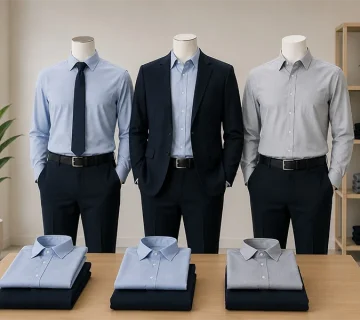
Corporate uniform companies play a vital role in creating professional workwear that reflects a brand’s identity while ensuring comfort and durability. Businesses across the UAE increasingly seek high-quality uniforms that maintain a consistent appearance and withstand daily wear. To achieve these expectations, manufacturers follow strict quality control procedures throughout every stage of production.
A well-designed uniform is more than just clothing; it represents a company’s image and values. From fabric selection to final inspection, every process must meet established standards. This commitment to quality helps organisations provide employees with reliable attire that supports both performance and presentation.
Corporate Uniform Companies and Fabric Quality Assessment
The foundation of any quality uniform begins with the fabric. Leading manufacturers carefully evaluate materials for strength, colour retention, breathability, and comfort before production starts. This ensures that uniforms maintain their appearance even after repeated washing and extended use.
Many uniform manufacturing companies implement detailed testing procedures to verify fabric performance. These assessments help identify potential issues before materials enter the production stage. As a result, businesses receive garments that meet professional standards and long-term expectations.
Key fabric quality checks often include:
- Tensile strength testing to assess durability.
- Colourfastness evaluations to prevent fading.
- Shrinkage analysis after washing cycles.
- Comfort and breathability assessments for employee wear.
By conducting these inspections early, manufacturers minimize defects and maintain consistency across large production orders.
Production Accuracy and Consistency Standards
Once approved materials enter production, maintaining accuracy becomes a priority. Skilled technicians monitor cutting, stitching, and assembly processes to ensure every garment follows approved specifications. Consistency across all sizes and designs helps create a professional appearance for employees.
A reputable corporate uniform manufacturer typically uses standardised production guidelines to reduce variations. These procedures support efficient manufacturing while maintaining quality across every batch. Such measures are especially important for organisations requiring large-scale uniform programmes.
Production quality control commonly focuses on:
- Precise pattern alignment and measurements.
- Stitch density and seam strength verification.
- Inspection of buttons, zips, and accessories.
- Monitoring garment symmetry and finishing quality.
These checks ensure each item meets established requirements before progressing to the next stage of manufacturing.
Enhancing Brand Identity Through Quality Assurance
Modern businesses often request customized corporate uniforms that align with their branding strategies. Quality assurance teams carefully review design elements to ensure logos, colours, and visual details are accurately reproduced. This attention to detail strengthens brand recognition and promotes a cohesive corporate image.
Lots of organizations across the UAE rely on professional uniform providers, because the quality factor is directly tied to how confident employees feel and how customers perceive them. When a uniform is well-kept and professionally produced, it quietly signals the organisation’s actual standards. Keeping quality consistent also lowers how often items need replacing, which in turn improves the total value for the organization.
Advanced inspection methods may include:
- Verification of embroidery positioning.
- Assessment of printed graphics and branding.
- Colour matching against approved samples.
- Review of garment finishing and presentation.
These procedures help maintain visual consistency across every uniform supplied to a business.
Corporate Uniform Companies and Final Inspection Procedures
Before delivery, leading corporate uniform companies do a complete last round of inspections, it’s basically the final check, you know. Each garment goes through a careful evaluation, with the goal of finding manufacturing defects, any measurement inconsistencies, or finishing issues that might’ve slipped in. Only the products that match the predefined standards will be moved into packaging and then dispatched.
Professional quality control teams assess both functionality and appearance during this stage. They aim to make sure that the uniforms people get meet the performance requirements, while still looking polished in the process, and that the whole thing is right on the first try. Careful reviews also lower the chance of returns and customer dissatisfaction, because fewer issues slip through.
Many business uniform suppliers implement sample-based and batch-based inspection methods to maintain quality consistency. These practices provide additional assurance that production standards remain consistent across all garments. Such measures contribute to stronger client relationships and long-term satisfaction.
Quality assurance is equally important for organisations sourcing uniforms through company uniform suppliers. In practice, having reliable inspection procedures makes it easier to avoid disruptions that stem from defective garments, even when workloads get heavy. Keeping standards consistent also helps with employee comfort and workplace professionalism, in a way that people notice day to day.
In markets that are extremely competitive, like those in the country, companies do not just want uniforms that look good, they want pieces that stay useful and last longer. Suppliers that follow strict quality standards are more prepared to meet these expectations. Their dedication to excellence makes enduring value for employers as well as employees.
Brand-focused garments such as company uniforms with logo require particularly careful inspection because branding elements must remain clear and durable throughout the garment’s lifespan. Quality control teams ensure logos maintain their appearance after washing and daily wear. This helps organisations preserve a consistent professional image.
Many organisations partner with the uniform suppliers in UAE that prioritise quality management systems throughout production. These kinds of processes, they kinda keep things reliable from the very initial design stage all the way to final delivery. As a result, clients gain greater confidence in the products they receive, knowing that consistent quality standards are maintained throughout the production process.
The reputation of the best uniform suppliers in UAE is often shaped by how well they manage to hold tight to strict quality standards while still making adjustments for specific client needs. Their money spent on inspection practices, trained staff and modern production technologies helps them deliver dependable outcomes, and that matters a lot. That commitment really makes them stand out within the corporate apparel market.
Conclusion
Quality control is still a defining factor in the success of corporate uniform companies, it plays into everything from fabric evaluation, production monitoring and branding verification to those last inspections. Each stage, if you pay attention properly, adds up to dependable professional attire. Companies that go with suppliers who are willing to follow strict quality standards often end up with long lasting uniforms, brand uniformity, and a visibly improved employee presentation. When these expectations are kept steady, manufacturers keep providing workwear solutions that match the shifting needs of contemporary organisations.
At Lumens Groups, we deliver premium-quality corporate uniforms with strict quality control standards, ensuring durability, comfort, and a professional brand image for every business.
Frequently Asked Questions
Quality control ensures uniforms meet standards for durability, comfort, appearance, and consistency. It helps reduce defects, improve employee satisfaction, and maintain a professional brand image.
Manufacturers typically evaluate fabrics for strength, shrinkage resistance, colour retention, and wearer comfort. These tests help determine whether materials are suitable for long-term professional use.
During final inspection, garments are checked for measurement accuracy, stitching quality, branding placement, finishing standards, and overall appearance before packaging and delivery.