Chemical Resistant Coverall selection should consider more than the substance being handled. The amount of time a worker may remain exposed can also influence the level of protection required during an activity. A garment intended for limited contact may need to be assessed differently when exposure is repeated or continues for an extended period.
Why Exposure Duration Matters in Chemical Resistant Coverall Selection
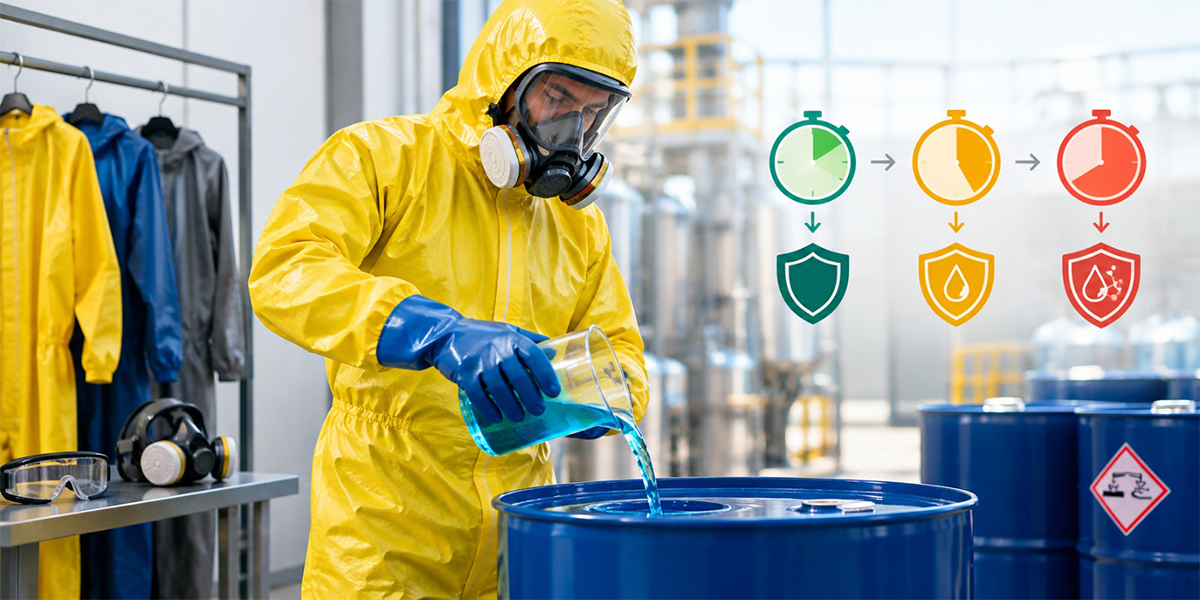
Exposure duration affects how protective clothing performs throughout a work activity. When contact with a chemical hazard happens repeatedly, protection needs to remain appropriate for the full period of use rather than being considered only at the first point of contact.
This makes protective coveralls an important consideration when workers may encounter liquids, residues or contaminated surfaces during their duties. The assessment should look at how long the garment is expected to remain in use, how frequently exposure occurs and whether the working conditions can change during the activity.
For example, exposure may involve:
- a single brief contact during a controlled activity;
- repeated contact at different stages of the same work process;
- extended periods where the garment remains exposed to a hazardous substance.
These situations can place different demands on protective clothing. Considering the expected exposure period alongside the nature of the hazard creates a more complete basis for selecting suitable protection.
How Repeated Exposure Changes Protection Requirements
Repeated contact presents different considerations from an isolated exposure. A worker may encounter the same substance several times during a shift, meaning the protective garment needs to remain suitable throughout the complete work period.
Chemical protective clothing should therefore be assessed according to the actual pattern of exposure. The frequency of contact, duration of individual exposures and possibility of contamination can all influence whether the selected garment remains appropriate as work continues.
The same principle applies to chemical protective wear when workers move through several stages of an activity. Rather than assessing protection around one moment of contact, the complete sequence should be considered to understand how exposure develops over time.
When Exposure Conditions Become Less Predictable
Exposure duration is not always fixed. A task that normally takes a limited amount of time may continue for longer because of additional cleaning, unexpected delays or changes in the work process. These circumstances can alter the conditions under which protective clothing is being used.
A chemical splash hazard, for instance, may require greater attention when contact occurs repeatedly or when contamination remains on a garment during continued work. The assessment should therefore account for both the expected exposure and reasonable changes that could occur while the activity is underway.
For organisations considering chemical resistant coveralls in Dubai, this approach can help create a more practical selection process. Apart from considering the chemical used, there may be a need to evaluate other factors such as exposure frequency, expected duration of exposure and changes in working conditions.
Matching Protection to the Exposure Scenario
The expected exposure period should form part of the overall risk assessment rather than being treated as a separate consideration. Hazard-specific protective clothing can then be selected according to the actual circumstances workers are expected to encounter.
A practical assessment can consider:
- how long chemical exposure is expected to continue;
- whether contact is occasional or repeated;
- the likelihood of splashes, residues or contamination;
- whether unexpected changes could extend the activity;
- whether the garment needs to remain suitable throughout the work period.
This method allows for the fact that each scenario of chemical exposure is not the same. This method will assist organizations in evaluating their protective clothing based on the real situation rather than only classifying them according to their type of clothing.
Managing Protection During Longer Work Periods
Additional issues may arise due to longer tasks that require workers to complete a series of steps wearing the same protective garment. In such cases, the state of the garment becomes relevant in the process.
Chemical handling PPE should therefore be considered as part of the wider work procedure. The effectiveness of the overall protective arrangement depends not only on the garment selected but also on how exposure develops and how the protection is managed during the work period.
Similarly, protective workwear may need to be reassessed when work activities become longer or exposure patterns change. A garment selected for an expected working period should not automatically be assumed to be suitable when the duration or circumstances of exposure become significantly different.
Reviewing Protective Clothing When Work Changes
The selection of a Chemical Resistant Coverall should reflect the complete exposure scenario rather than focusing only on the chemical involved. Duration, frequency and changing conditions can all contribute to the protection requirements associated with a particular activity.
A review may become appropriate when work procedures are modified, exposure periods increase or workers begin encountering the hazard in a different way. This helps ensure that protective clothing continues to correspond with the conditions workers are actually facing.
Taking exposure duration into account also creates a more consistent approach to protective clothing decisions. Instead of selecting garments based on a single expected situation, organisations can consider how protection needs may develop from the beginning to the end of the work activity.
Conclusion
Exposure duration is an important part of assessing chemical protective clothing. By considering how long exposure may last, how often contact occurs and how working conditions may change, organisations can make more informed decisions about protective garments and their use.
Lumens Groups supplies chemical-resistant coveralls and protective clothing to help businesses select suitable workwear for different chemical handling and exposure conditions.
Frequently Asked Questions
The evaluation process should take into account the nature of the hazard, the likely period of exposure, the likelihood of splashes and/or contamination, and the environment in which the garment will be worn.
Longer or repeated exposure can create different protection requirements from brief contact. Considering the expected duration helps ensure that the selected garment corresponds with the complete work activity.
Requirements should be reviewed when the work procedure, exposure duration, frequency of contact or working conditions change significantly.